Light
Bright and tea-like, with the most origin character. Expect florals, citrus and crisp acidity — the roast that lets the farm speak.
Free carbon-neutral shipping over $45
·Roasted & shipped within 48 hours
Great coffee isn't luck — it's a recipe you can repeat. Here are the exact ratios, grind sizes, times and temperatures we use at the roastery, distilled into guides you can trust block after block.
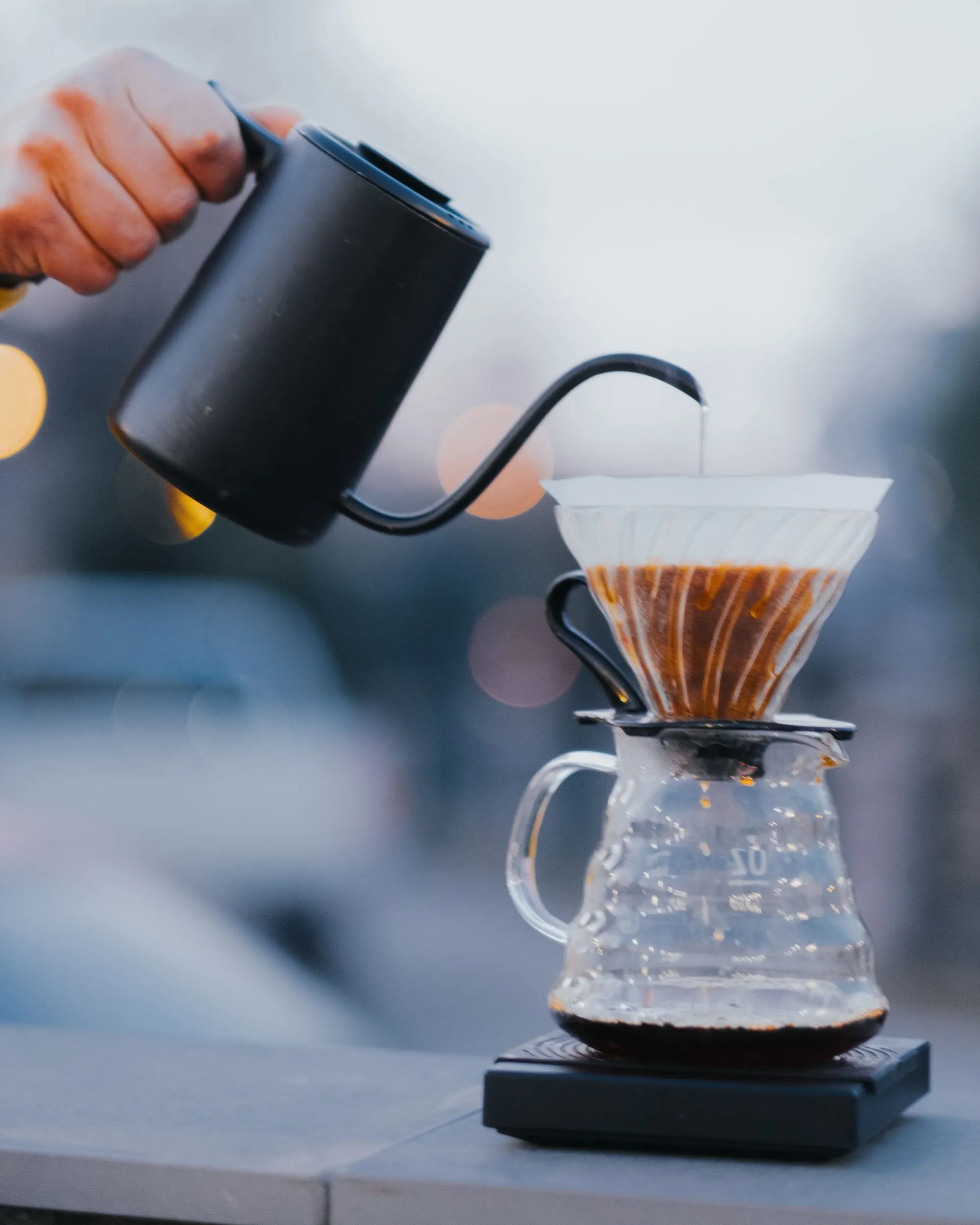
Recipe
1:16 · 96°C · 3:00
House standard
Repeatable cups
Same recipe, every block
Roast level is the first variable in any recipe — it shapes acidity, body and sweetness before you ever touch the kettle. Here's how each one reads in the cup.
Bright and tea-like, with the most origin character. Expect florals, citrus and crisp acidity — the roast that lets the farm speak.
The balanced ledger: rounded sweetness, caramel and cocoa with just enough fruit. Forgiving across nearly every brew method.
Bold, low-acid and full-bodied, with chocolate, toasted nut and a smoky finish. Built to cut through milk and stand up cold.
Roasted for pressure — syrupy body, deep crema and dark-sugar sweetness engineered to bloom under the pump.
Each guide is the recipe we'd hand a friend: the ratio, the grind, the timing and the temperature, then the steps to put them to work. Scale every recipe up or down — the ratio is what holds.
A clean, articulate cup that spotlights origin clarity and aroma.
Rinse the filter with hot water, then add 22 g of medium-fine grounds and tare your scale.
Pour 50 g of water to bloom and let it degas for 30–45 seconds.
Pour in slow, steady spirals to 350 g total, keeping the bed level.
Aim to finish your draw-down by around 3:00 for a clean, even extraction.
Full immersion for a rich, heavy-bodied cup with zero gadgets.
Add 30 g of coarse grounds to the carafe and pour in 450 g of water.
Stir the crust gently after one minute to break the bloom.
Let it steep undisturbed for a full four minutes.
Press the plunger down slowly and decant immediately to stop extraction.
Pressure-driven intensity — the foundation for every milk drink.
Dose 18 g of finely ground coffee, distribute evenly, and tamp level with firm pressure.
Lock the portafilter and start the shot, targeting roughly 36 g out.
Watch the flow: a steady, honey-like stream pulling in 25–30 seconds.
Dial finer if it runs fast and thin, coarser if it chokes and tastes bitter.
Slow, cold extraction for a smooth, low-acid concentrate.
Combine 100 g of coarse grounds with 800 g of cool, filtered water.
Stir to fully saturate, then cover and steep at room temperature for 18 hours.
Filter through a paper or cloth filter into a clean vessel.
Serve the concentrate over ice, diluting 1:1 with water or milk to taste.
Fast, low-temperature immersion — sweet, clean and travel-proof.
Add 15 g of medium-fine grounds to the chamber and pour in 210 g of water.
Stir gently and steep for one minute with the cap and filter attached.
Set the brewer on your mug and press down slowly over about 30 seconds.
Stop pressing at the first hiss to avoid pulling through bitterness.
Method aside, these hold for every cup you'll ever brew. Get them right and even a humble setup beats a sloppy expensive one.
Coffee is at its peak two to four weeks off roast. Buy whole bean with the roast date on the bag and use it within a month.
Scoops lie. A simple kitchen scale and a target ratio are the single biggest upgrade you can make to your cup.
Grind immediately before you brew. Aroma and flavor start fading within minutes of the burrs touching the bean.
Just off the boil is the sweet spot. Too hot scorches and turns bitter; too cool brews sour and under-developed.
Your cup is 98% water. Clean, filtered, lightly mineralized water lets the coffee — not the tap — come through.
Any of our roasts will work in any method — but these are the matches we reach for first. A simple map from your brewer to the block.
Not sure where to start? Browse the full ledger and filter by roast.
A perfect recipe is only as good as what goes in the grinder. Stock your wallet with freshly roasted, single-origin coffee and put these guides to work tomorrow morning.